A Driveway Culvert or Tinhorn
A driveway culvert carries ditch water beneath your entrance. In Oklahoma, you may know it as a tinhorn. When the pipe or the ground around it develops a problem, you may notice a sinking spot, washed-out gravel, damaged pipe ends, or water taking a different path after rain.
Those changes deserve a closer look. Some crossings need clearing or localized repair. Others need a replacement pipe and restoration of the surrounding driveway. The first step is understanding what is happening at the crossing.
The Short Answer
Arrange an assessment when you see new settlement, soil washing away, visible pipe damage, shifted sections, recurring blockages, water crossing the drive, or repairs that keep failing. These signs help identify what to investigate; the condition of the pipe, its support, and the surrounding drainage determine the work.
If a crossing is flooded, visibly undermined, or collapsing, keep people and vehicles away from the affected area. Do not enter the pipe or moving water to investigate. Floodwater can hide a washed-out driveway or road surface. Report a hazard affecting a public road to the responsible road authority.
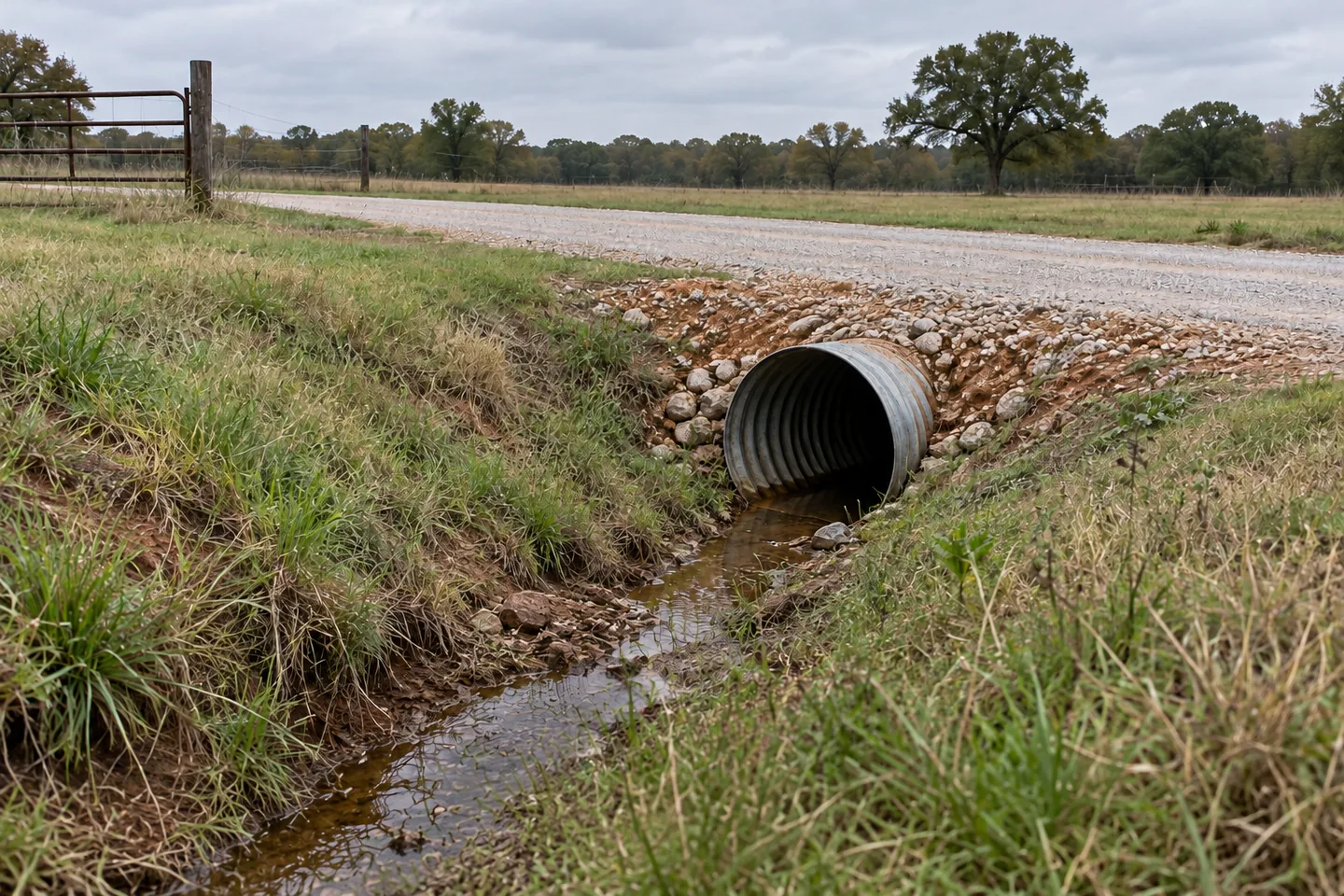
Seven Signs to Take Seriously
Each sign is a reason to investigate the crossing. None of them, by itself, names the repair or proves that replacement is required.
The Driveway Is Sinking Above the Pipe
A new dip, recurring depression, or opening near the pipe's route is a reason to have the crossing checked. Settlement can involve the pipe, the fill around it, or soil that is being lost from beneath the driveway.
Note where the change is and whether it is getting larger. FDZ considers the surface condition alongside the pipe and surrounding support. Adding more gravel may restore the surface temporarily while leaving the cause unresolved.
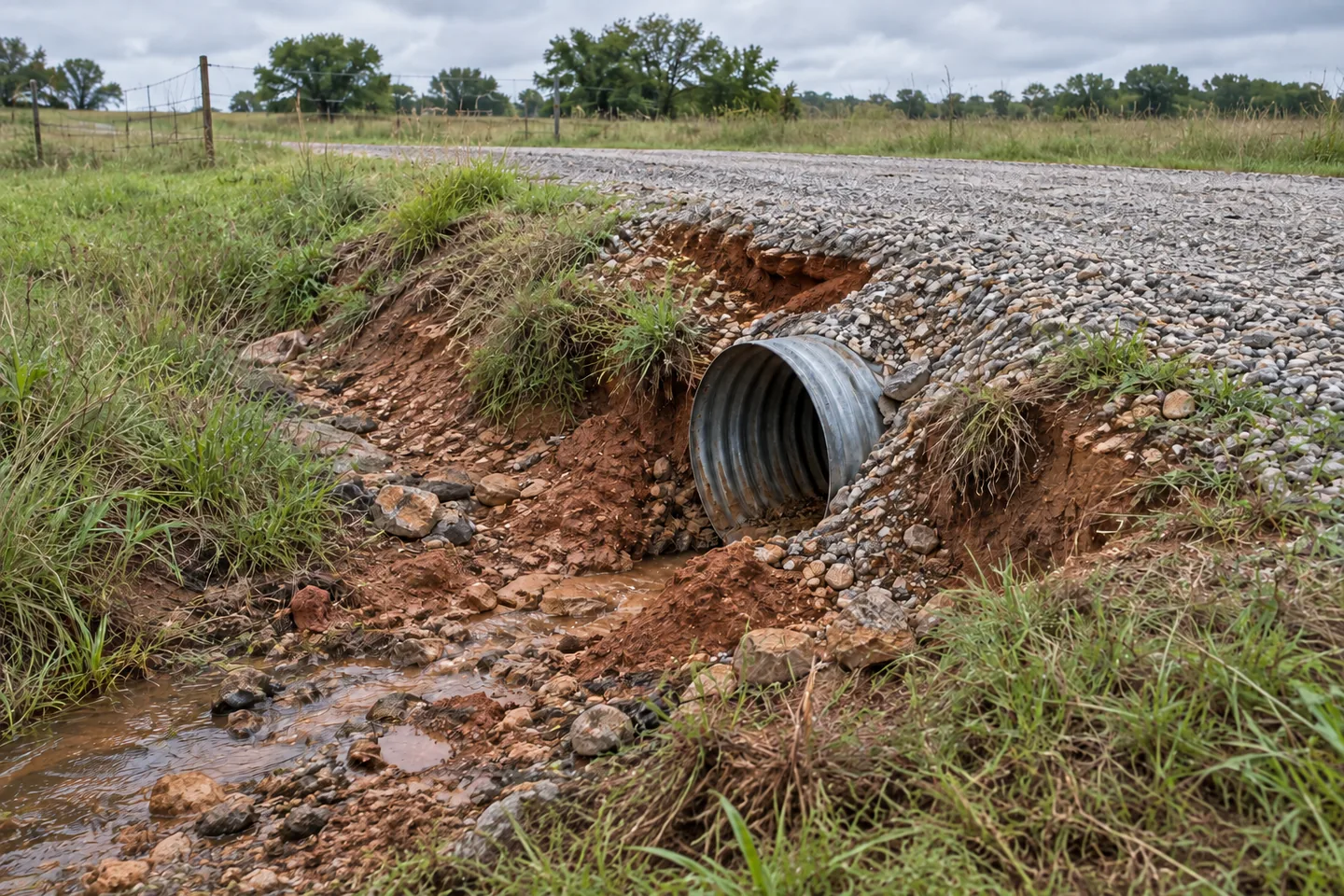
Soil or Gravel Is Washing Away Around the Crossing
Look for a widening washout beside an opening, exposed pipe, a driveway edge that is losing material, or a hollow beneath an end section. Erosion around a crossing may need attention even when the visible pipe opening looks clear.
The assessment considers where water enters, where it leaves, and what is happening to the adjacent ditch and driveway. Depending on the findings, the scope may involve erosion protection, restoration, pipe work, or a combination.
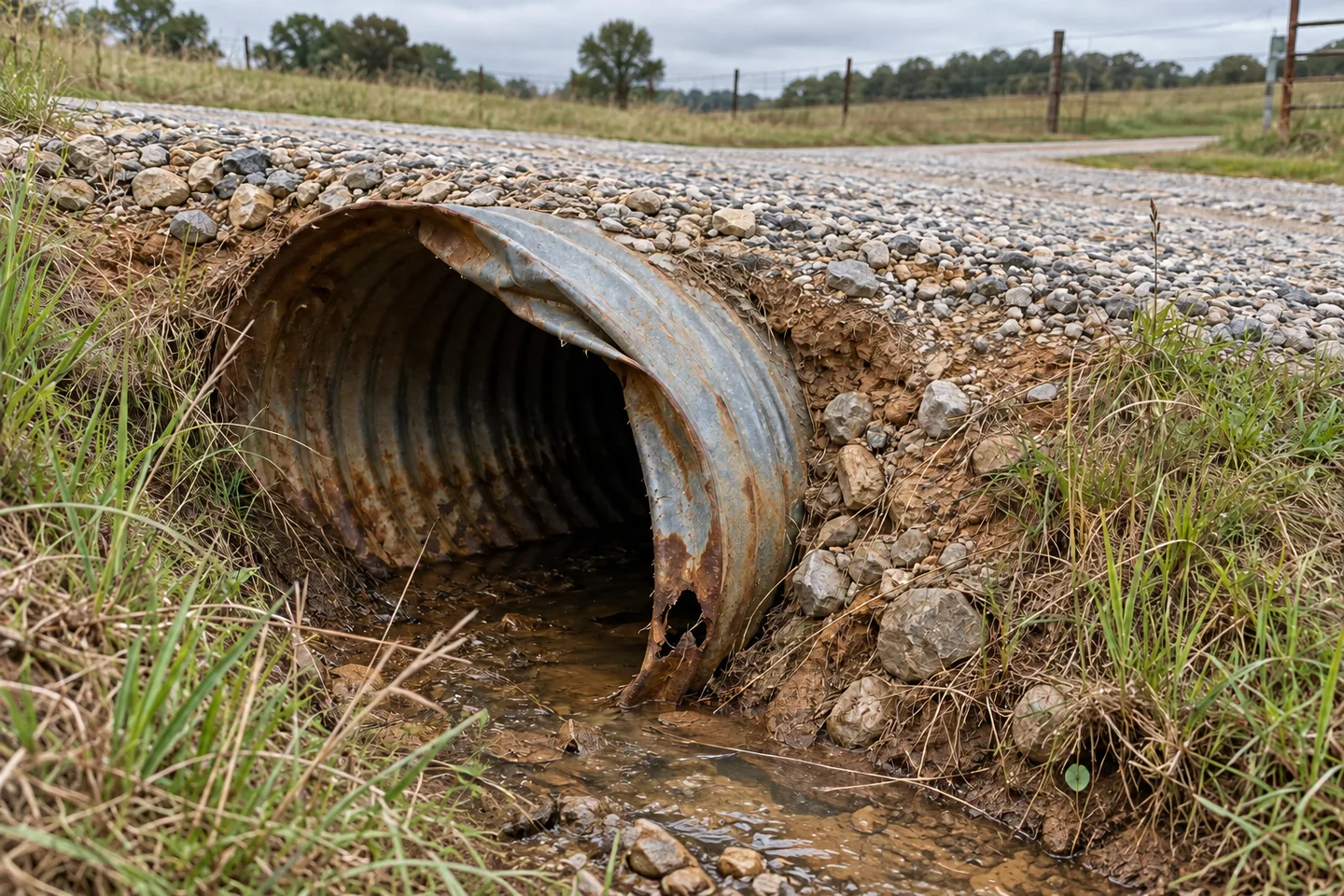
The Pipe Is Visibly Crushed, Cracked, or Rusted Through
A flattened opening, torn metal, missing pipe material, or a visible break warrants assessment. Surface rust and a hole through a metal pipe are different observations; color alone does not establish the pipe's remaining condition.
Photograph visible damage from stable ground if it is safe to do so. The location and extent of the damage, the pipe material, and the way vehicles use the entrance all matter when evaluating repair or replacement.
Pipe Sections or End Treatments Have Shifted
You may notice a gap between sections, an end that has moved out of line, or a headwall leaning away from the pipe. Movement can affect the crossing and the soil around it.
The important question is why it moved and whether the surrounding support is still sound. A visible gap or displaced end should be evaluated with the rest of the crossing before deciding how to restore it.
Debris or Sediment Keeps Restricting the Opening
Leaves, branches, soil, or gravel can obstruct an inlet, outlet, or pipe. A blockage does not automatically mean the pipe needs replacement.
If the problem returns after clearing, note what is collecting and where. The assessment should consider the source of that material, the ditch condition, the pipe's condition, and the discharge route. That helps distinguish a maintenance issue from a crossing that needs additional work.
Water Backs Up or Crosses the Driveway
Water standing near an inlet or flowing over the drive is a reason to investigate the whole drainage path. A restricted opening, downstream conditions, the crossing layout, and the amount of runoff can all matter.
Record when it happens and whether the behavior has changed. Water near the inlet alone does not establish that a culvert is undersized. FDZ reviews the crossing and outlet conditions before defining the work.
The Same Repair Fails After Rain
Repeatedly replacing gravel, filling a depression, or patching a driveway edge can become expensive. When damage returns at the same crossing, the recurring pattern is useful information.
Tell FDZ what was repaired, when, and what happened afterward. Reviewing that history with the current conditions can help identify whether the next scope needs to address the driveway surface, erosion, the pipe, or the wider drainage route.
Does It Need Clearing, Repair, or Replacement?
Clearing or maintenance may be appropriate when an obstruction is the problem and the crossing remains serviceable. Recurring obstruction calls for a closer look at why material keeps collecting.
Localized repair or stabilization may suit damage confined to a particular area, such as erosion around an opening. The rest of the crossing still needs to be considered before selecting that approach.
Replacement may be appropriate when pipe deterioration, damage, or the crossing's condition makes a suitable repair impractical. The replacement scope also needs to address the support, drainage connections, and restoration around the pipe.
Further drainage review may be needed when upstream flow, the downstream ditch, or outlet conditions are contributing to the problem. A different pipe alone may leave those conditions unresolved.
For the work FDZ provides, see driveway culvert and tinhorn installation and replacement.
What FDZ Checks at the Crossing
An assessment brings the visible symptoms together with the conditions that affect the work:
- The existing pipe's condition, alignment, and visible connections.
- The driveway surface and signs of settlement or lost support.
- The ditch, inlet, outlet, and nearby erosion.
- Vehicle and equipment use, including expected changes.
- Utilities, equipment access, and driveway access during construction.
- Plans or specifications you already have and the approvals that apply to that address.
- The driveway and landscape restoration needed to finish the job.
FDZ provides a written estimate after assessment or plan review. We supply the materials and handle the required permits for the approved scope. Installation follows the approved specifications and product requirements for that crossing.
What to Prepare Before Requesting an Estimate
Have the job address ready and describe what changed. Helpful details include:
- Where the damage or water problem appears.
- Whether it happens during rain, afterward, or throughout dry weather.
- Any previous clearing, gravel replacement, or pipe repairs.
- The vehicles and equipment that use the entrance.
- Whether this is the property's only driveway access.
- Existing plans, specifications, or photos you already have.
Photos of the whole entrance, visible pipe ends, and affected driveway area can help explain the problem when taken safely. Include the details in the estimate form; photos and plans can be shared by emailing FDZ Construction.
Questions About a Damaged Driveway Culvert
Can I replace the existing pipe with a larger one? The right replacement depends on the crossing, water flow, vehicle use, material requirements, and applicable approvals. A larger pipe is not automatically the right solution. FDZ reviews those conditions before the replacement scope is agreed.
Will I be able to use my driveway during replacement? Access depends on how much of the crossing must be opened and the work required. Tell FDZ if it is your only entrance. Access arrangements and any temporary closure are discussed and written into the agreed scope.
Who should I contact if the culvert meets a public road? Identify the city, county, or state authority responsible for the road before changing the crossing or ditch. Ownership, maintenance responsibility, and approval requirements depend on the location. FDZ identifies the applicable review for the approved work at your address.
What affects the cost? Pipe removal, excavation, the specified replacement material, access, permits, end treatments, and driveway or landscape restoration all affect the scope. The written estimate identifies the work and the restoration included for your crossing.
Request a Culvert Estimate
If your driveway crossing is sinking, washing out, damaged, or repeatedly blocking, Request a Culvert Estimate. Tell us what you are seeing and where the property is located. FDZ will assess the crossing or review your plans and provide a written estimate for the proposed work.
You can also call (405) 458-4805.
For water collecting elsewhere in the yard, explore yard drainage services or our guide to French drains, catch basins, and grading.
Further Reading
If your driveway crossing needs this kind of look, FDZ Construction assesses and installs driveway culverts and tinhorns. Water collecting away from the ditch is a different system; see yard drainage in Oklahoma City or French drain vs catch basin vs grading.